SUCK AND SQUEEZE
Rows of tiny wings
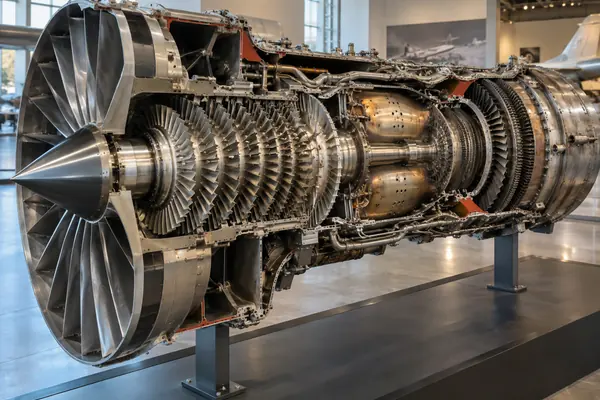
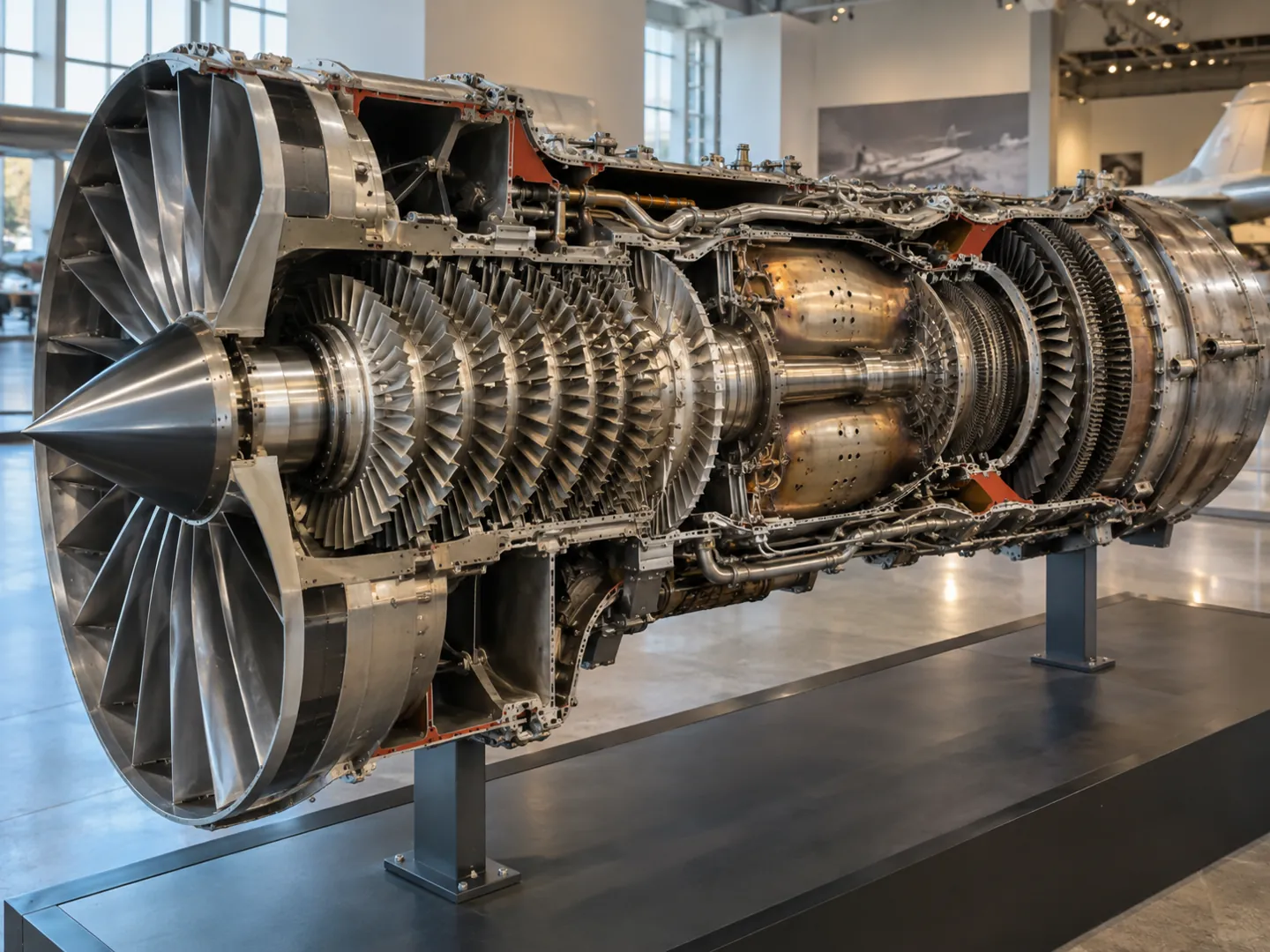
The inlet brings in large amounts of air. NASA describes the compressor as many rows of airfoils, each adding a small jump in pressure.
Follow the airHOW THE ENGINE WORKS
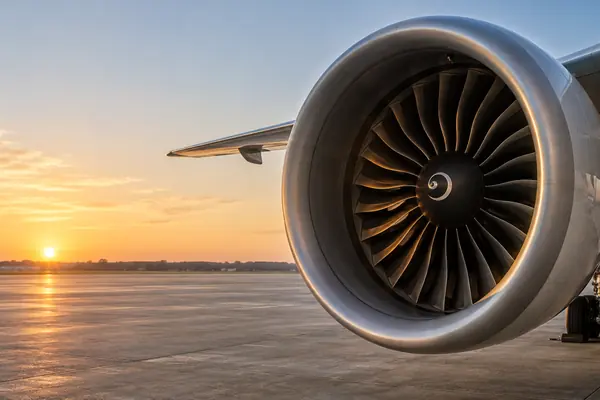
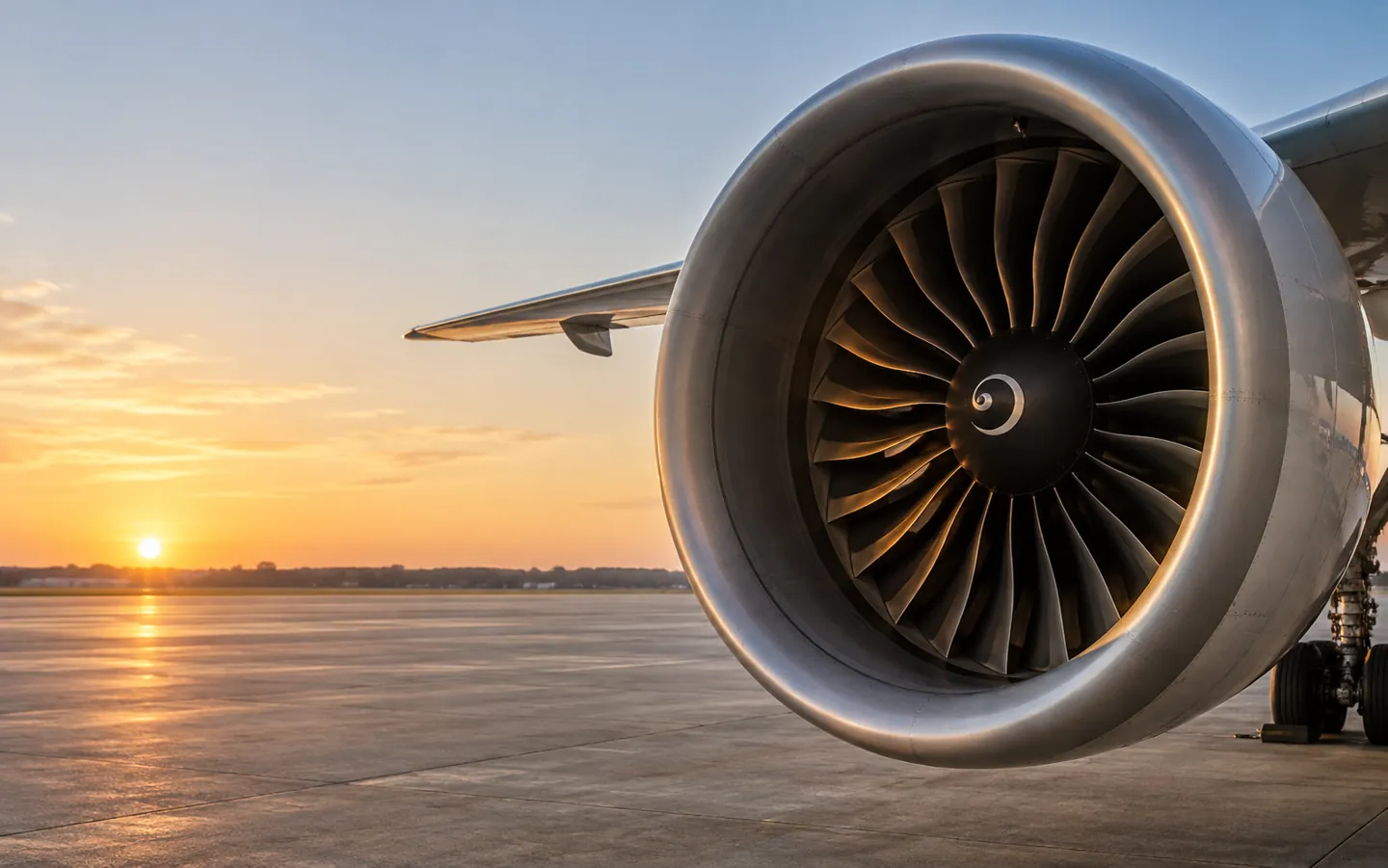
A jet engine is a very fast way of throwing air backwards.
It swallows huge amounts of air, squeezes it, burns a little fuel in it and lets the hot gas rush out of the back. Engineers sum it up in four words, and every jet from the first British one in 1941 to today's airliners follows them.
4 STAGES one spinning shaft
THE SHORT ANSWER
Four stages, joined by one shaft.
The turbine at the back drives the compressor at the front.
SUCK AND SQUEEZE
The inlet brings in large amounts of air. NASA describes the compressor as many rows of airfoils, each adding a small jump in pressure.
Follow the airBANG AND BLOW
A small amount of fuel burns in the squeezed air. The hot gas spins a turbine that turns the compressor, and what is left speeds out of the nozzle as thrust.
Compare engines1941
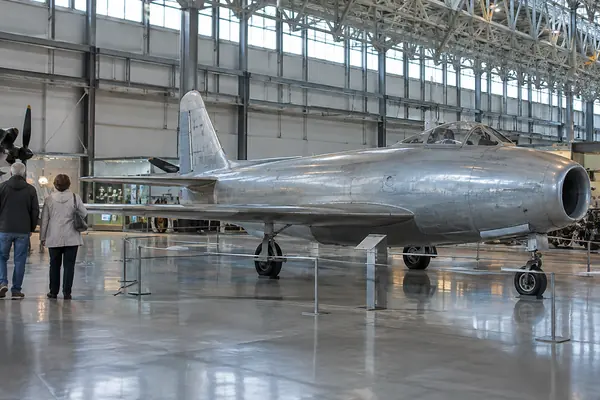
Frank Whittle filed his first patent in January 1930. On 15 May 1941 the Gloster E.28/39 took off from Cranwell on a 17-minute flight.
Read the storyA QUICK ENGINE CHECK
Pick an engine to see its bypass ratio: how much air flows around the hot core compared with the air going through it. The bar shows how much air bypasses the core.
Based on NASA Glenn Research Center's guides to turbojets and turbofans, and NASA Spinoff.
TWO NUMBERS WORTH KNOWING
One number from the first British jet flight,
one from a modern airliner engine.
17 min
Length of Britain's first jet flight
Whittle recalled that the Gloster E.28/39 took off from Cranwell at 7.45 p.m. on 15 May 1941, and that the flight lasted 17 minutes. The aircraft is now in the Science Museum Group collection.
FIRST FLIGHT · CAMBRIDGE
9 : 1
Air around the core vs through it
NASA Spinoff describes a large airliner engine, developed from the late 1980s, with a 9:1 bypass ratio, about 10 percent better fuel consumption than the pre-1995 generation and 2 decibels less noise.
BYPASS · NASA
An aero-engine engineer told the Naked Scientists that jet noise rises with jet velocity to the 8th power, one reason big, slower-blowing fans make engines quieter.
FOLLOW ONE GULP OF AIR
Picture a single breath of air passing through the engine. Each stage does one job, and the last one pays for the first.
Large amounts of surrounding air are drawn steadily into the front of the engine.
Rows of spinning and fixed blades push the air up to higher and higher pressure, one small step at a time.
A small amount of fuel is mixed in and ignited. The gas stays at about the same pressure but gets much hotter.
The hot gas spins the turbine, which turns the compressor through a shaft. The energy left over speeds the gas out of the nozzle.
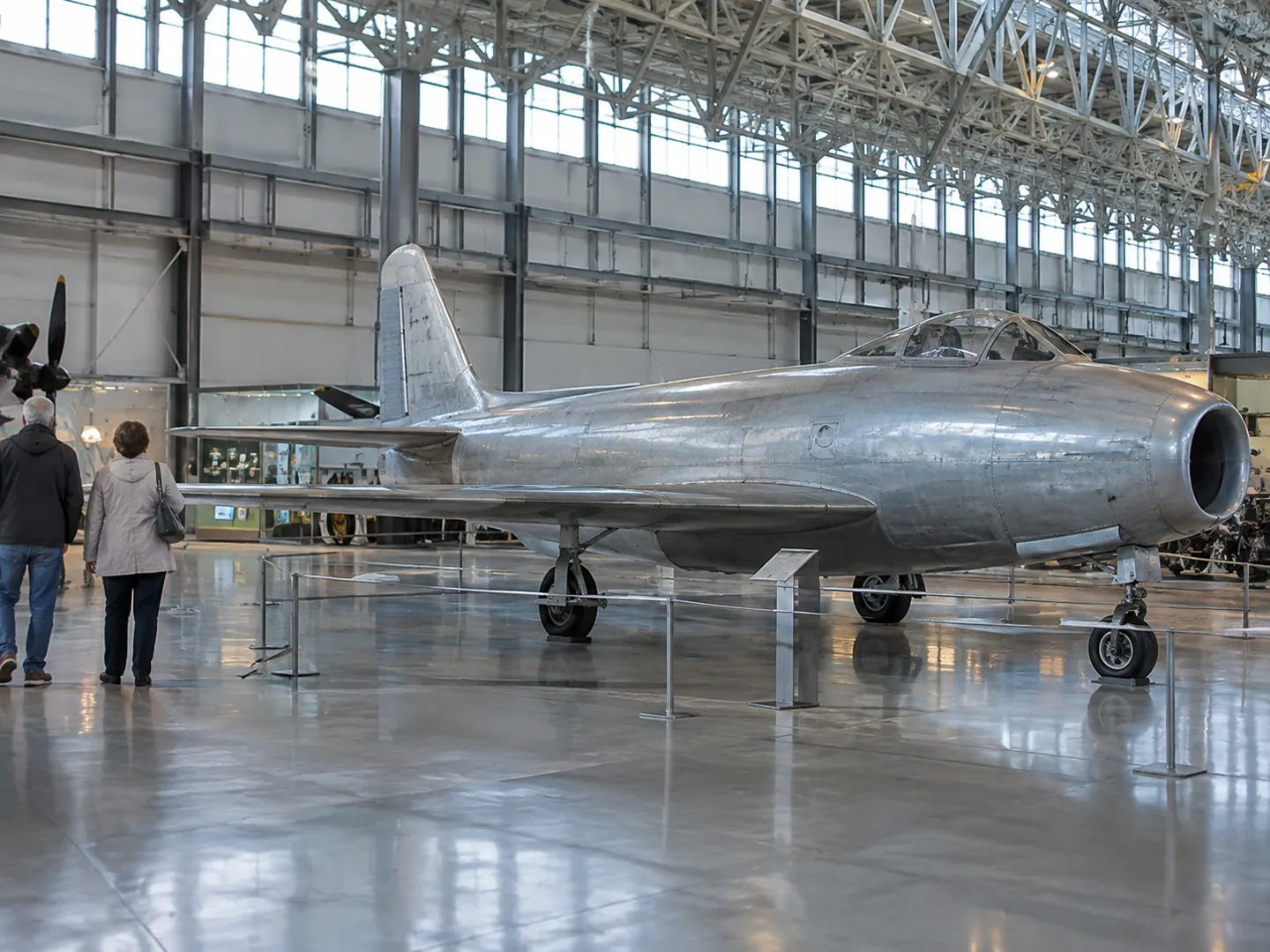
THE BRITISH JET
Frank Whittle filed British Patent No. 347,206 on 16 January 1930. His company, Power Jets, was formed in March 1936, and testing of his first engine began on 12 April 1937.
The Gloster E.28/39, built in Gloucestershire to carry his engine, made its first flight from RAF Cranwell on 15 May 1941. The aircraft is kept by the Science Museum Group.
Questions
It is a shorthand for the four stages: the inlet takes in air, the compressor squeezes it, fuel burns in it, and the hot gas blows out through the turbine and nozzle to make thrust.
The turbine takes energy from the hot gas by spinning in the flow. NASA explains that this energy turns the compressor through a central shaft, and what is left over gives thrust through the nozzle.
A jet engine with a large fan at the front and an extra turbine at the back to drive it. Some air goes through the hot core, and the rest goes around it. Most modern airliners use them.
NASA defines it as the ratio of the air that goes around the engine core to the air that goes through it. Airliners use high bypass ratios; many fighters use low ones with afterburners.
The Gloster E.28/39, powered by Frank Whittle's engine, flew from Cranwell on the evening of 15 May 1941. Whittle recorded the flight as lasting 17 minutes.
Sources
ABOUT THIS NAME
doodlejet.com is part of the DoodleSale portfolio. Check the current listing and available purchase or lease options.